Lighting Tips for Arabic Wedding Halls and Event Spaces
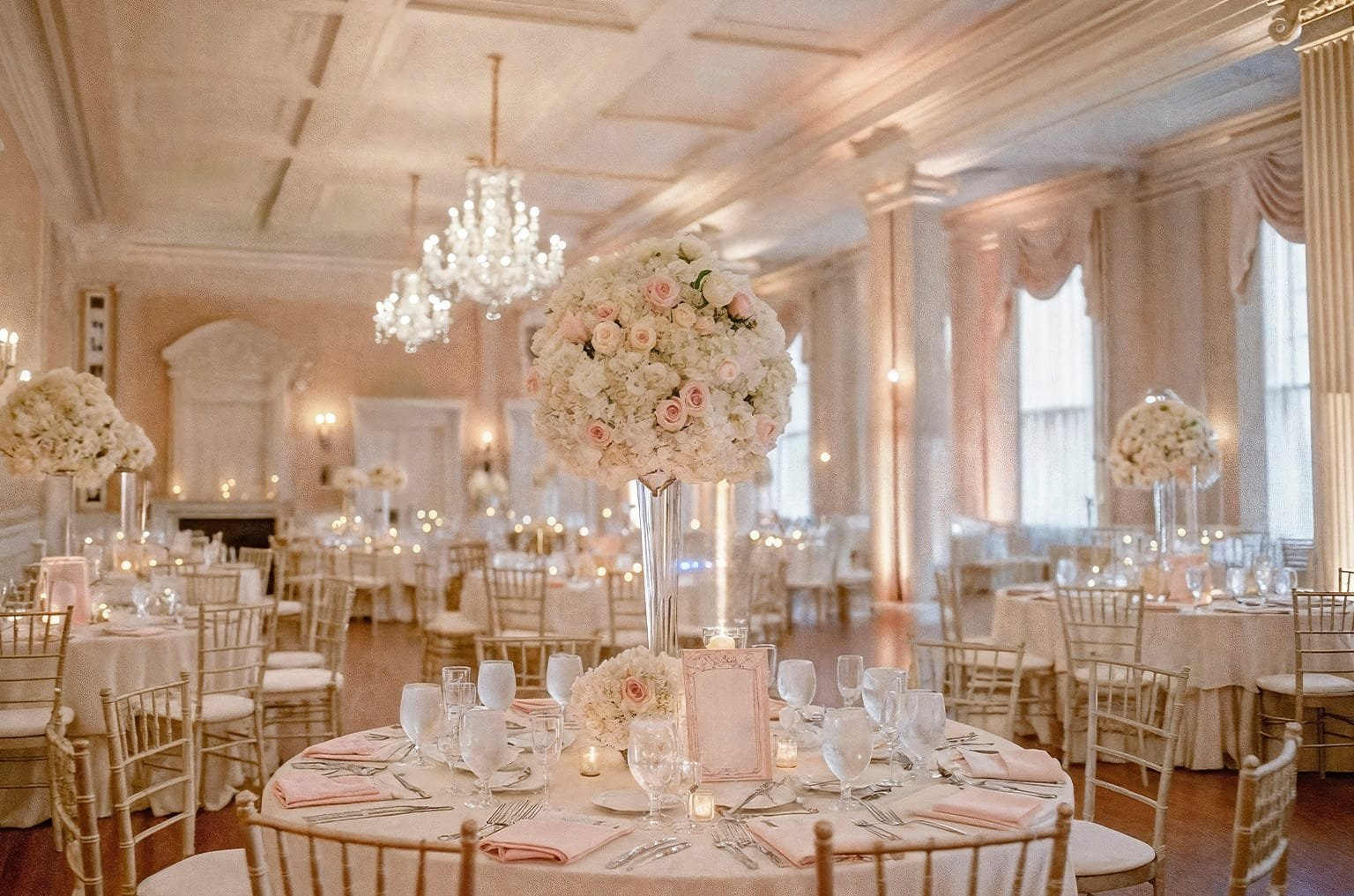
Magnificent decorations, gold-toned details, lavish food presentations, and grand ceremonial rituals… these are some of the most important elements that complete the enchanting atmosphere of Arab weddings. However, another detail that elevates the splendor of Arab weddings is the lighting. Lighting solutions not only make the venue visible but also enhance the perception of luxury, set the ambiance, and convey the emotions of the ceremonies on stage. At this point, if you want your wedding to be magnificent and spectacular, you can immediately check out the content we have prepared for Arab weddings. This way, you can elevate the grandeur of your wedding to the highest level.
The Importance of Lighting in Arab Weddings
In Arab weddings, lighting is not merely a technical detail that illuminates the venue; it is a powerful element that expresses cultural heritage, traditional grandeur, and the value given to guests through light. In Arab culture, weddings are ceremonies that showcase a family’s social prestige, generosity, and the importance placed on celebration. Therefore, wedding lighting is not just ordinary decoration—it is an aesthetic presentation of a social message.
In this context, lighting design in Arab weddings typically aims to create a magnificent, bright, and rich atmosphere. Large crystal chandeliers, especially when combined with gold-toned materials, reinforce the perception of luxury. Since the bride is regarded as the star, almost the queen of the ceremony, stage lighting is designed with strong yet soft transitions to clearly define her facial features and make her dress dazzling. In this region, culture regards the bride’s beauty and elegance as a family pride, and lighting design is carefully crafted to support this perception.
Dance floors serve as focal points carrying the energy of Arab entertainment culture. Therefore, dynamic RGB light effects, lasers, and moving spotlights create a stage atmosphere that matches the rhythm of darbuka beats, popular Arab music, and traditional dance performances. This is not just entertainment; it is a visual expression of the collective joy of the celebration.
Finally, the way guests are hosted also plays a crucial role in lighting. In Arab societies, guest satisfaction is extremely important for a family’s reputation. Therefore, table lighting, entrance pathway lights, and focused lighting in seating areas are arranged to provide each guest with a sense of exclusivity and visual comfort.
In conclusion, lighting in Arab weddings is much more than making a space visible. Light becomes a symbolic language representing generosity, the spirit of celebration, cultural grandeur, and hospitality. This language glimmers in crystals, crowns the bride, follows the rhythm of music, and highlights the host’s prestige while welcoming guests. In this way, the wedding transforms from a mere ceremony into a sparkling display of cultural identity.
What to Consider When Choosing Lighting for Arab Weddings?
In Arab weddings, where grandeur and luxury are prominently displayed, it is essential to pay careful attention to lighting to enhance this splendor. By following the recommendations below, you can create flawless wedding lighting. Within this scope, the key points to consider are:
- Warm Light Tones Should Be Preferred (2700K–3200K): Choosing warm light tones is always ideal for Arab weddings, as these tones best highlight gold decorations, crystals, and wedding dress details.
- Bride- and Stage-Focused Lighting: Soft spotlights and cross-angled lighting (not from above) should be used to illuminate the bride’s face without creating shadows.
- Glare Control on Crystal and Gold-Detail Decorations: Direct and narrow-beam lights can cause glare on crystals; therefore, soft and side lighting should be preferred.
- Controlled Use of RGB Light: Dynamic lighting effects should only be used on the dance floor and entrance shows, avoiding excessive use in guest areas.
- Lighting Power Should Match Ceiling Height: High ceilings require stronger and wider-angle lights, while low ceilings should use simple and narrow-beam lighting.
- Consider DUV and CRI Values: Lighting with DUV close to 0 and CRI 90+ ensures the correct appearance of the wedding dress, skin tones, and photographs, so such lighting should be chosen.
- Highlight the Entrance and Bridal Path: Focused lights that create a sense of footsteps should be preferred to enhance guests’ visual expectations and emphasize the bride’s walk.
- Table Lighting Should Ensure Guest Comfort: Use dim but clearly visible table spotlights that are not excessively bright; no direct light should fall at eye level.
- Chandelier Selection Should Reflect the Venue’s Identity: Chandeliers with high crystal density and a luxurious design enhance the perception of prestige in Arab weddings; therefore, jewel-heavy chandeliers should be prioritized in the venue.
- Lighting Scenarios Should Be Programmed According to the Event: Different lighting atmospheres should be created for each moment, including entrance, ceremony, dance, cake cutting, and closing.
Advantages of Lighting in Arab Weddings
Lighting solutions in Arab weddings offer significant advantages. Therefore, emphasis should be placed on appropriate lighting solutions. In this context, the benefits provided by lighting in Arab weddings are as follows:
- In Arab weddings, prestige and generosity are highly valued; bright, warm, and extravagant lighting visually represents family honor and the respect given to guests.
- In Arab culture, the bride is considered the star of the wedding, so special stage lighting highlights the bride’s dress, makeup, and jewelry in the most magnificent way.
- Soft table lighting and entrance pathway lights give guests a VIP feeling, which is an important indicator of respect and hospitality in Arab society.
- RGB light effects and moving spotlights enhance the grandeur of drum-led entrances, zaffe processions, and traditional dance rituals.
- Essential elements of Arab weddings, such as gold jewelry, embroidered dresses, and sparkling décor, appear even more dazzling under appropriate lighting.
- In Arab culture, the choice of wedding venue is a status symbol; lavish lighting elevates the hall’s quality and reinforces its brand value.
- When crystal chandeliers, gold columns, mirrors, and glass details shine under the light, the venue gains an identity of “luxury, exclusivity, and nobility.”
- Lighting changes during key moments such as the bride’s entrance, the wedding ceremony, cake cutting, and dance performances enhance the dramatic and emotional impact of the event, providing guests with an unforgettable experience.
Common Lighting Mistakes in Arab Weddings
In Arab weddings, lighting errors can sometimes occur due to poor planning. To avoid such situations, we recommend reviewing the common mistakes we have prepared for you. This way, you can prevent these errors from happening. The most frequent mistakes include:
- Large crystal chandeliers provide a luxurious appearance, but when used alone, the stage, tables, and bridal walkway remain dark. Therefore, multi-layered lighting is essential.
- In Arab weddings, since the bride’s face and makeup are prominent, lighting from directly above alone can cast shadows under the eyes, making her appear tired.
- Narrow-beam spotlights cause “blowouts” on crystal columns and chandeliers, making the hall appear excessively bright and visually uncomfortable.
- Continuous and intense use of colored lights can irritate guests’ eyes and create unwanted color artifacts in videos.
- Cold lights above 4000K make gold tones appear pale, and plastic or dirty gray, reducing the grandeur of an Arab wedding.
- The dance floor should be dynamic, while the stage must be controlled and aesthetically pleasing; equal brightness can push the bride into the background.
- Guest comfort is culturally very important in Arab weddings; otherwise, spots at eye level can cause discomfort and complaints.
- Weak lighting in high ceilings darkens the hall, while strong lighting in low ceilings causes unnecessary glare and heat sensation.
- Incorrect color values can make the wedding dress and skin tones appear yellow, orange, or gray. Photography is paramount in Arab weddings.
- Using the same lighting for the bride’s entrance, zaffe, ceremony, cake cutting, and dance moments completely diminishes the dramatic effect of the event.
Lighting Tips for Arab Weddings
Stage and Bride-Groom Area Lighting
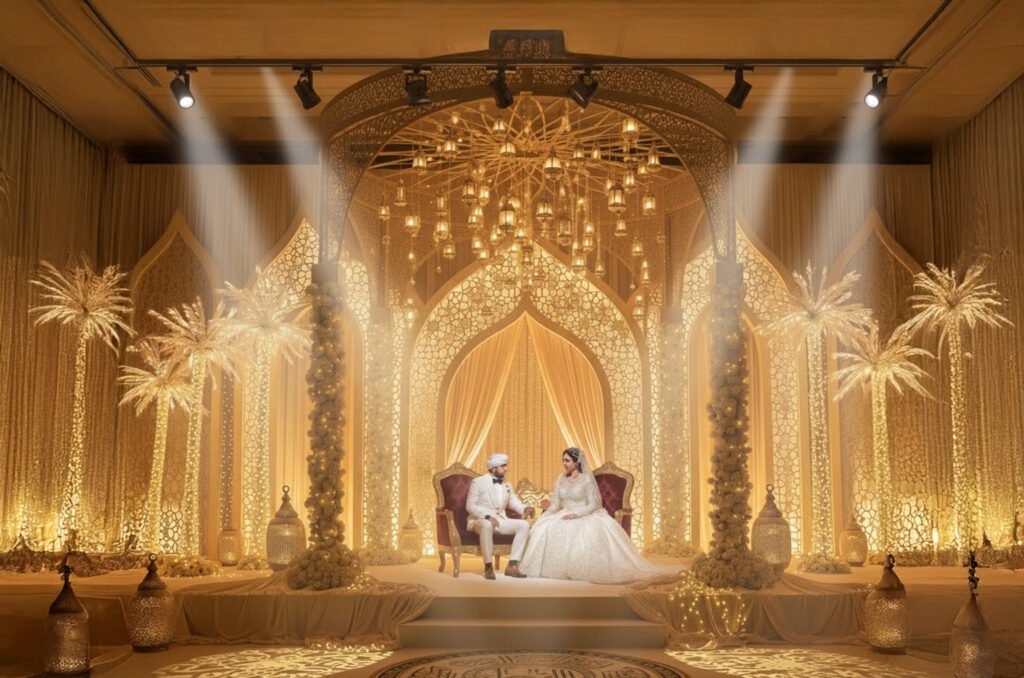
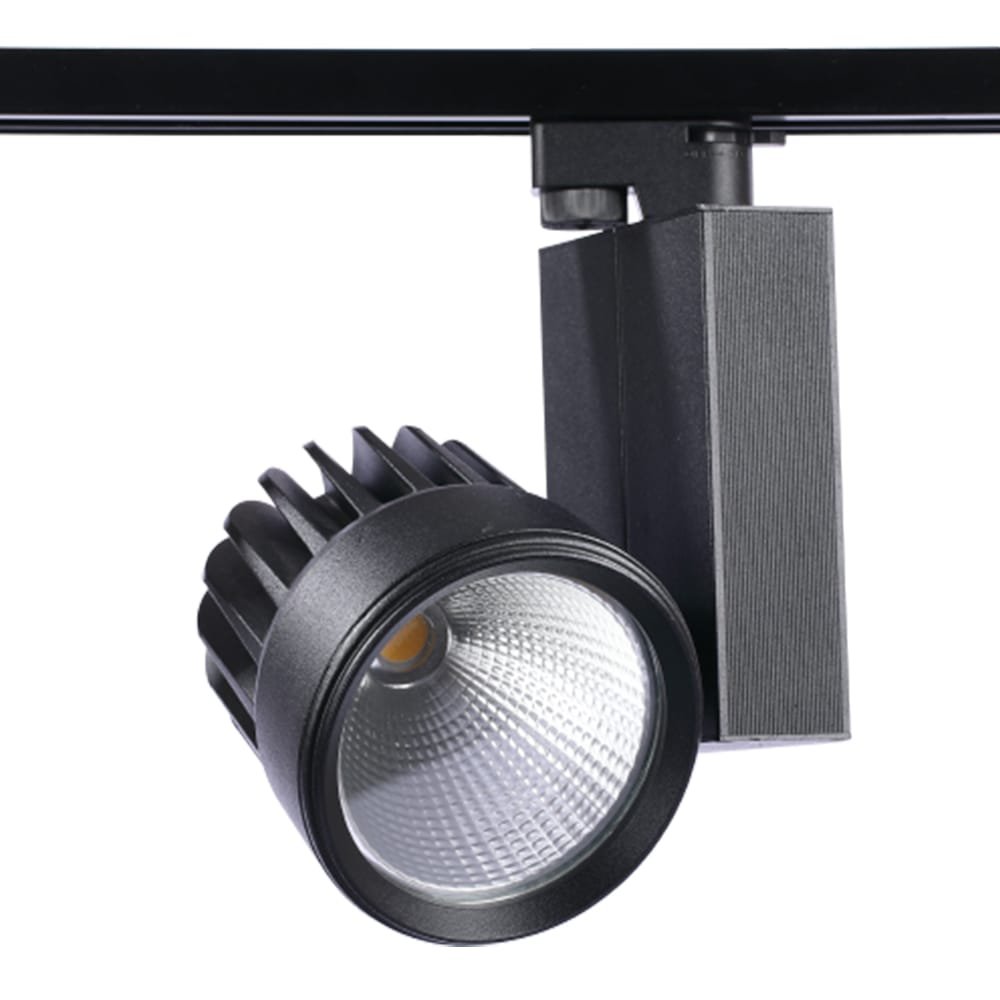
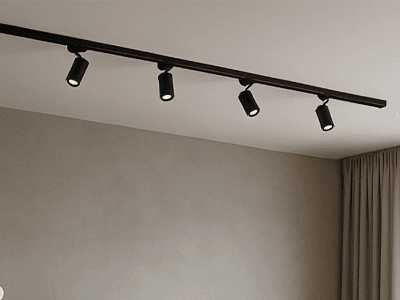
In Arab weddings, the stage is the most magnificent part of the celebration. Therefore, stage lighting should be given great importance. Since the bride and groom are the focal points, the lights should provide soft white illumination that brightens their faces without casting shadows. Especially if there are gold, crystal, or ornate decorations, light angles that enhance sparkle without causing eye strain should be preferred. Additionally, moving track spotlights are one of the best options for this purpose.
Table and Seating Area Lighting
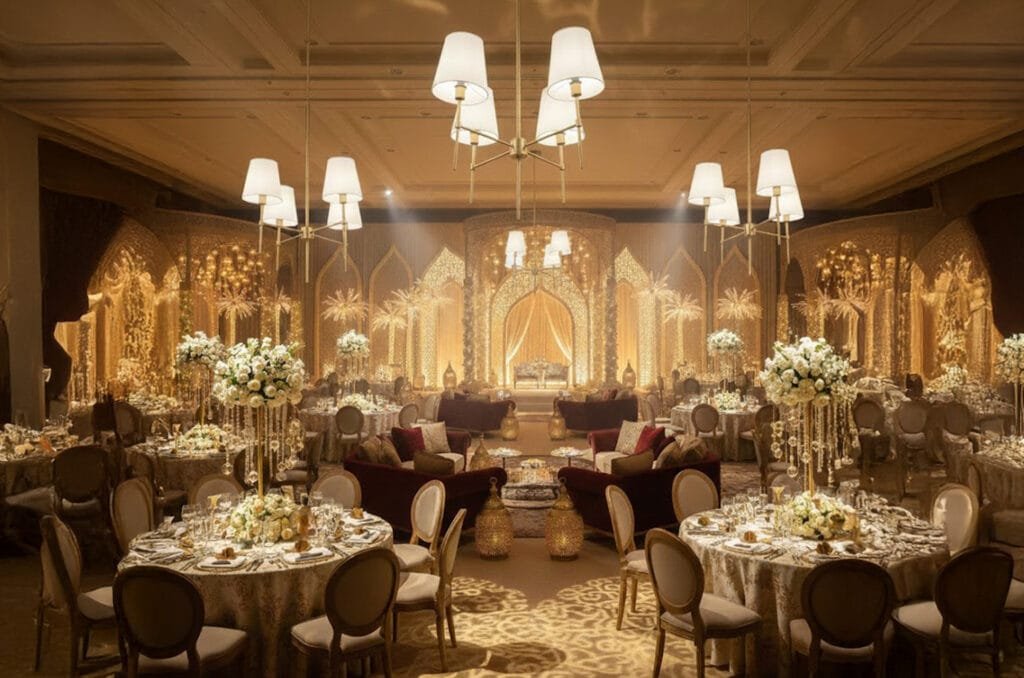
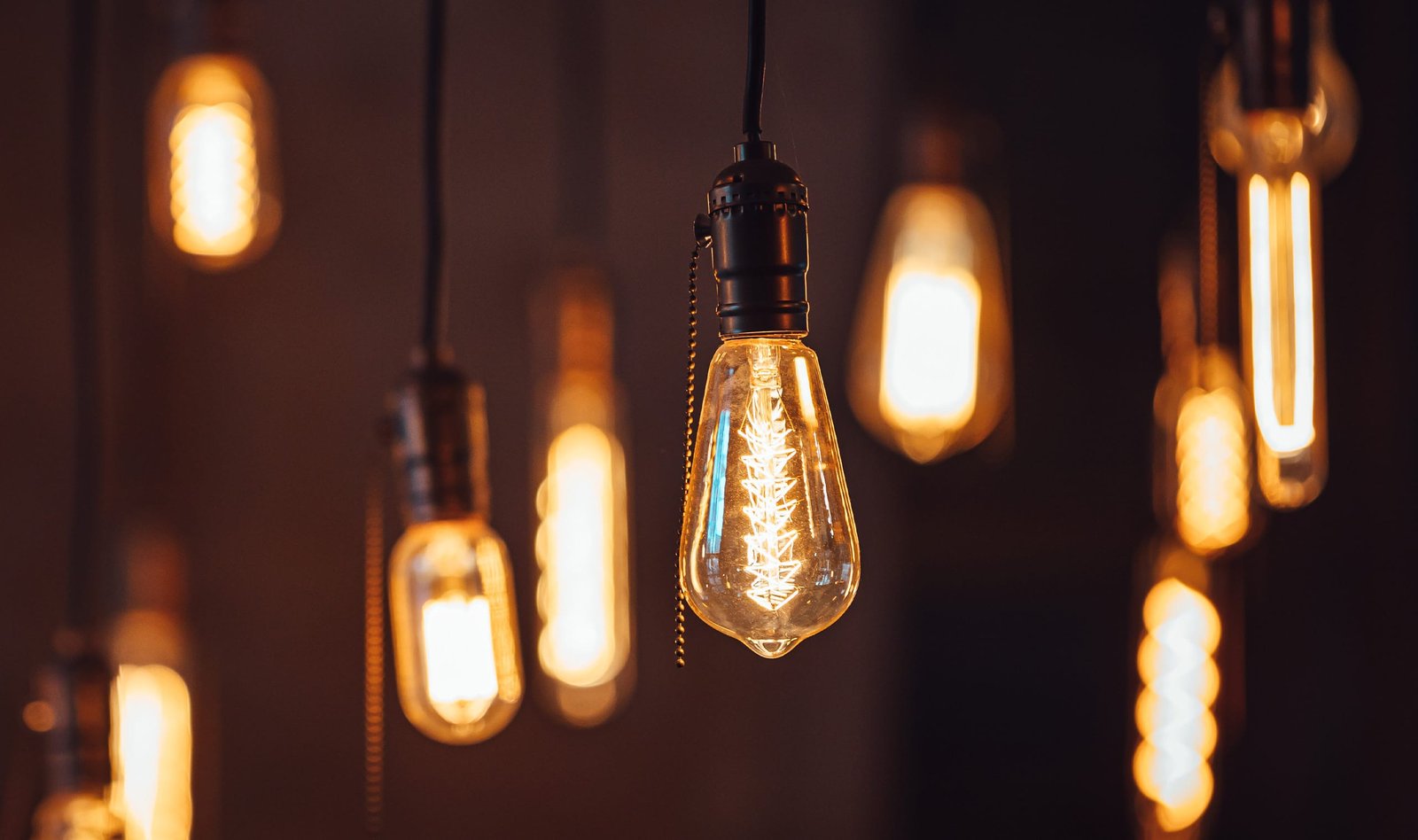
Since it is important in Arab wedding tradition for guests to feel special, tables should be illuminated with focused lighting. In this regard, high-ceiling chandeliers, miniature pendant lights above the tables, and soft amber tones give the tables an elegant glow. Additionally, the lighting should soften faces to ensure high-quality photos and provide color accuracy that aesthetically showcases the food presentations. This way, the areas where guests are seated become more comfortable, and the table details appear magnificent in photos and videos taken throughout the wedding.
Entrance and Reception Area Lighting
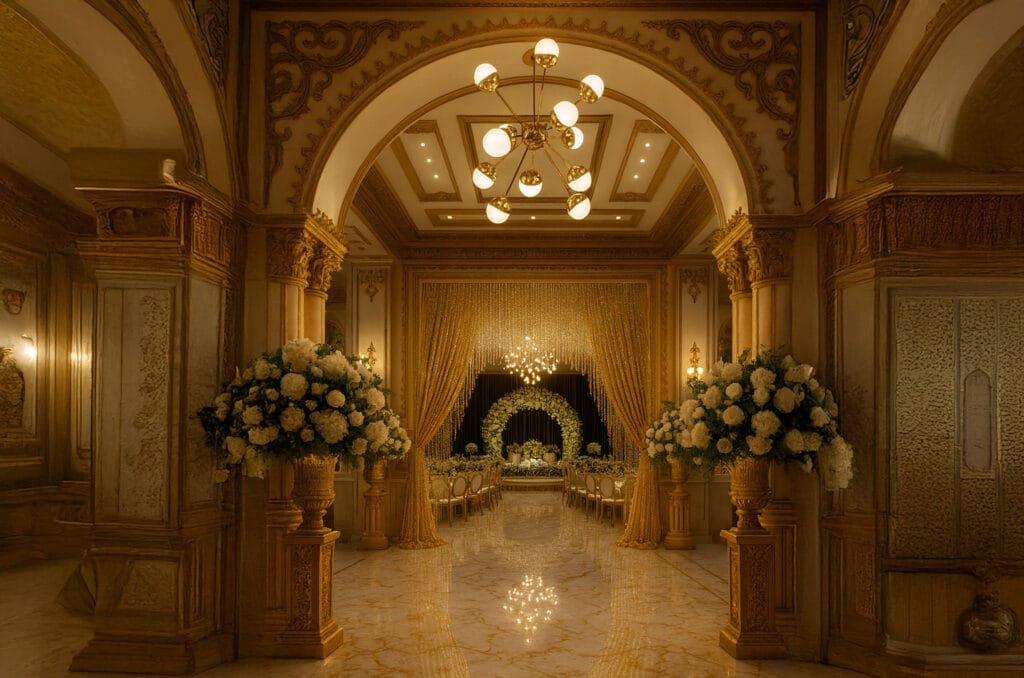
The entrance area is where guests form their first impression of the venue. Therefore, the lighting should create a grand yet welcoming atmosphere. Gold-toned wall wash lights, light waterfalls, or crystal-detailed pendants enhance the perception of luxury. Additionally, floor spotlights along the pathway, decorative LED strips, or small lights above floral arrangements make the welcome more impressive. This way, guests can feel the concept and grandeur of the wedding even before stepping into the venue, perceiving themselves as part of a special celebration.
General Lighting
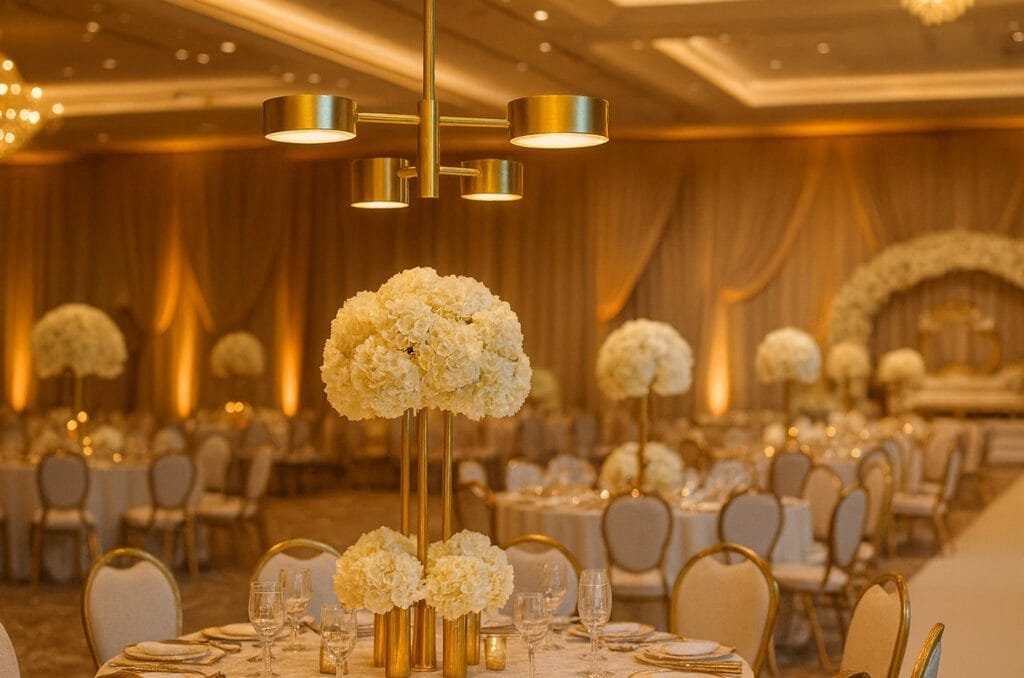
General lighting is the primary layer of light that defines the overall atmosphere of the hall. In Arab weddings, warm white tones (2700K–3000K) are commonly preferred; these tones highlight gold decorations and make the space appear more luxurious. Depending on the ceiling height, powerful chandeliers, indirect LED strips, and wide-angle projectors that provide uniform light distribution should be used. General lighting should always be balanced and illuminate the space at a level that is comfortable for the eyes. Otherwise, guest comfort can be significantly affected.
2026 Lighting Trends for Arab Weddings
With the evolution of Arab weddings, trends are changing this year. The changes, especially in lighting, are elevating the splendor and luxury of Arab weddings. In this context, if you are curious about the lighting trends in 2025 Arab weddings, we can say they are as follows:
- Golden-Toned Smart Light Designs: In 2026, classic gold decorations are being replaced by warm golden light transitions managed via smart control panels. These systems enhance the golden sparkle during the bride’s entrance while offering a softer, luxurious glow during stage moments.
- Dynamic Bridal Path Lighting Scenarios: In 2026, bridal path lighting gains importance in Arab weddings. Lights synchronized with footsteps, slow fade-in/out effects, and color changes following the rhythm during the zaffe will become standard. The bride essentially takes a “queenly walk” highlighted by light.
- Glare Control Technology for Crystal Elements: This year, anti-glare spotlights and very soft-edged light cones that prevent crystals from glaring will be widely seen. Crystal chandeliers achieve both more sparkle and a visually comfortable elegance.
- 3D Laser & Holographic Effects on the Dance Floor: 3D laser light ceilings and holographic effects that match the rhythmic texture of Arab music will remain highly popular. Especially during zaffe shows, combined with LED drums (Light Drums) and illuminated costumes, they create a theatrical entertainment experience.
- Stage Drama with Fog + Light Combinations: Light fog–light combinations during the bride’s entrance, the wedding ceremony, and the cake-cutting create a romantic and dramatic effect. In 2026, this effect will be implemented with controlled, elegant, and photo-friendly techniques.
- Elegance in Tabletop Micro Spotlights: The use of micro spotlights on each table to highlight food service and floral decorations is becoming widespread. This technique, giving guests a VIP feeling, represents a modern interpretation of Arab hospitality culture.
- Traditional-Luxury Blend with Flame-Effect LEDs: The feast, fire, and flame theme—a cultural symbol of the Middle East—is modernized with LED Flame Effect Lighting. Especially in entrance ceremonies, it provides an authentic yet safe sense of grandeur.
- Mirror-Reflected Decorative Lighting: Light effects amplified by reflections on mirror or mother-of-pearl surfaces add a sense of infinity to the venue. It creates a “double luxury, quadruple light” atmosphere.
If you want to use the right lighting solutions for Arab weddings, you can get in touch with the expert team at Variolux Lighting, specialists in lighting, who can also provide expert advice on importing lighting fixtures to the UAE as a reliable lighting fixtures manufacturer.
Frequently Asked Questions About Lighting Tips for Arab Wedding Halls and Event Venues
What light tone should be preferred for Arab wedding halls?
Warm light (2700K–3200K) should be preferred in Arab weddings. This tone enhances gold decorations, crystal chandeliers, and embroidered wedding dresses, making them appear more luxurious and grand. At the same time, it provides natural skin tones in photographs.
How does the use of colored lights affect the wedding atmosphere?
Colored lights enhance the atmosphere, especially during the zaffe procession, dance shows, and stage performances. However, excessive use can reduce guest comfort and alter the color of the wedding dress. Therefore, dynamic, controlled lighting should be used only in entertainment areas.
How does ceiling height affect lighting in the wedding hall?
High ceilings require large chandeliers and light waterfalls to make the space appear more majestic, while low ceilings are better suited for slim pendant lights and hidden LED applications. Otherwise, the hall may feel overly confined.
Is DUV (color accuracy) important in wedding halls?
Yes. Lights with low DUV and high CRI values accurately display the true colors of the wedding dress, gold tones, and makeup, and also enhance photo clarity.
How should lighting be applied in crystal-heavy décor?
Direct harsh lighting should be avoided; diffused, glare-free, warm-toned lights should be preferred. This ensures the crystals sparkle elegantly without causing visual discomfort.
What is the ideal light angle for the wedding table?
A soft angle of approximately 30–45 degrees is ideal, as it eliminates facial shadows and enhances the appearance in photographs.
Can lighting become part of the wedding hall’s brand image?
Yes. Well-designed lighting gives the hall a prestigious appearance and acts as a signature in every photo taken.
Does lighting intensity affect guest comfort at weddings?
Absolutely. Too bright light can be uncomfortable, while too dim light can make the space feel heavy. Balanced lighting ensures guests feel comfortable.
Products

VR1024 – Küre Küme Cam Kolye
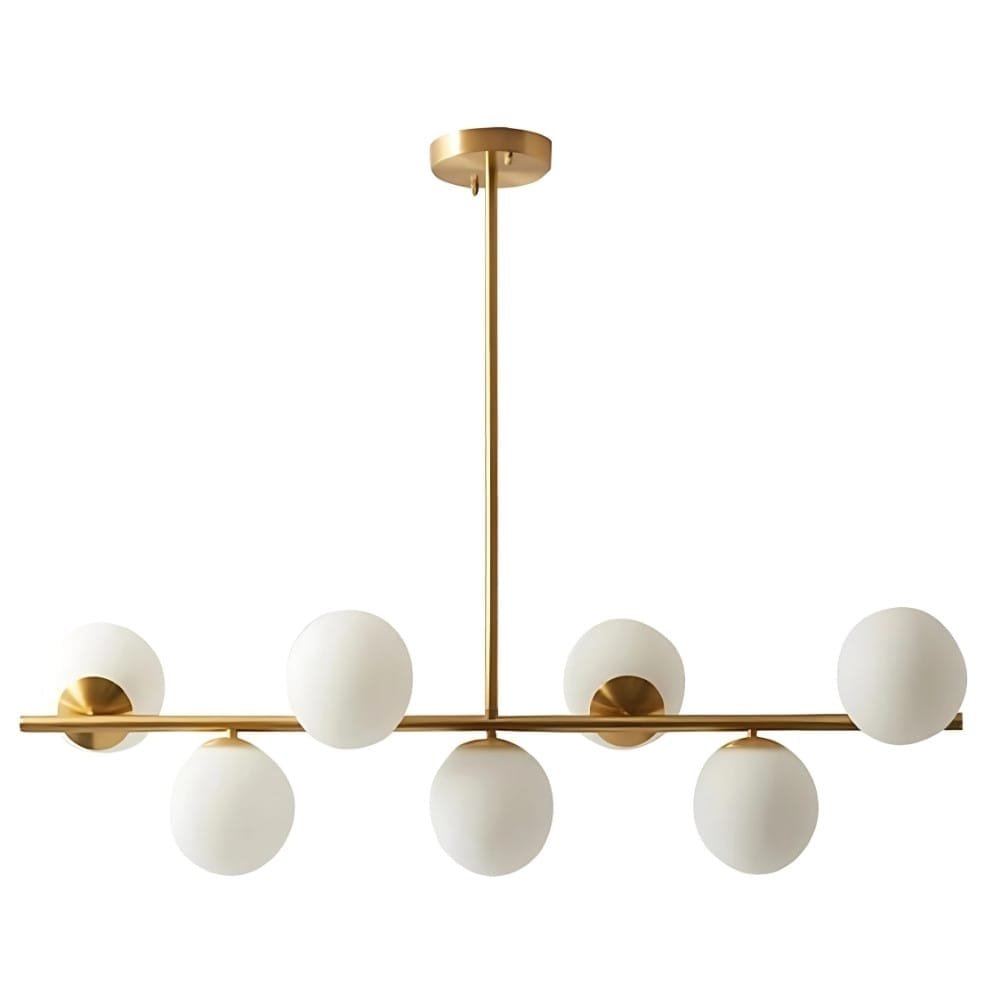
VR1025 – Opalys Vespera Glass Pendant Lamp
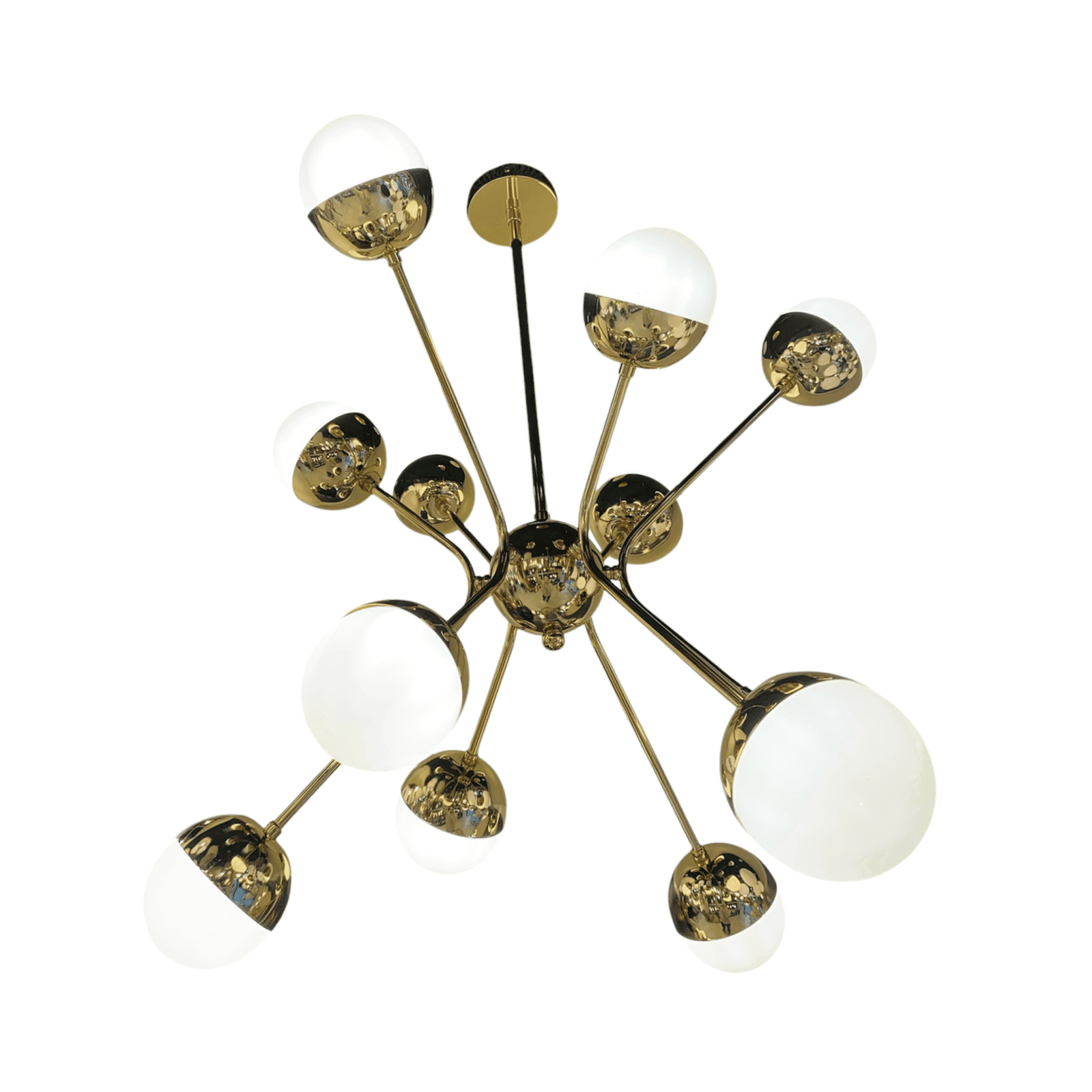
VR1021 – Serpenta Aura Glass Pendant Lamp
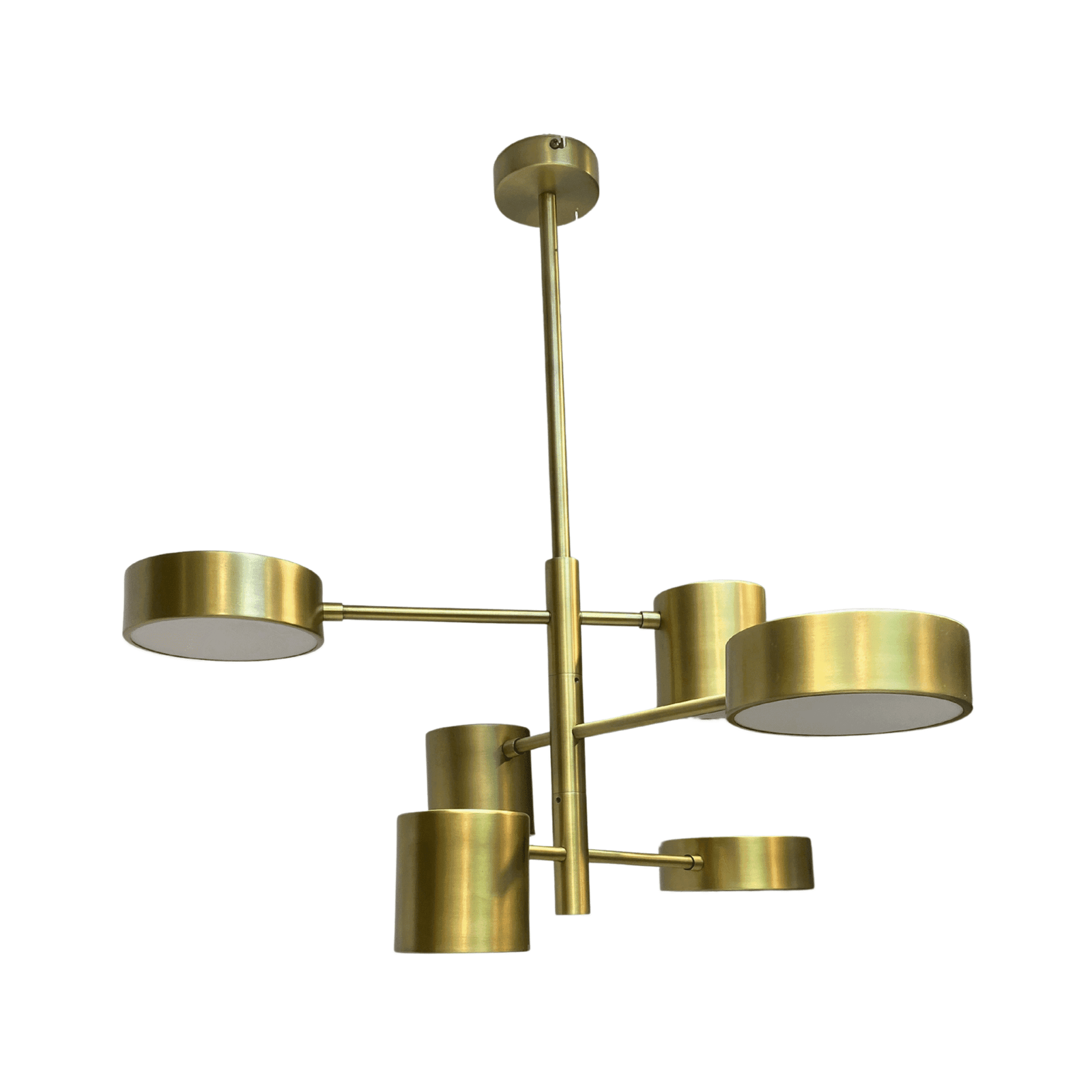
VR1031 – Vantablack Lux Metal Pendant Lamp
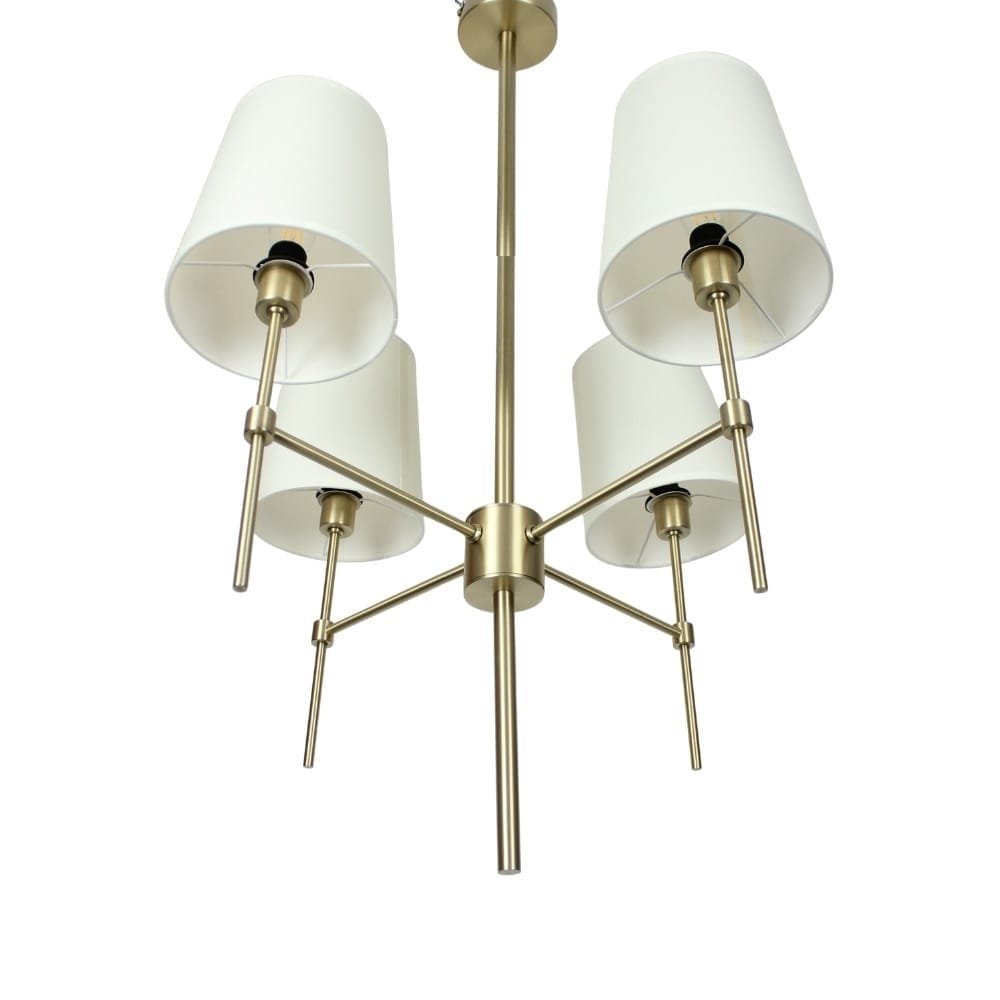
VR1030 – Grandeur Lampshade Pendant Lamp
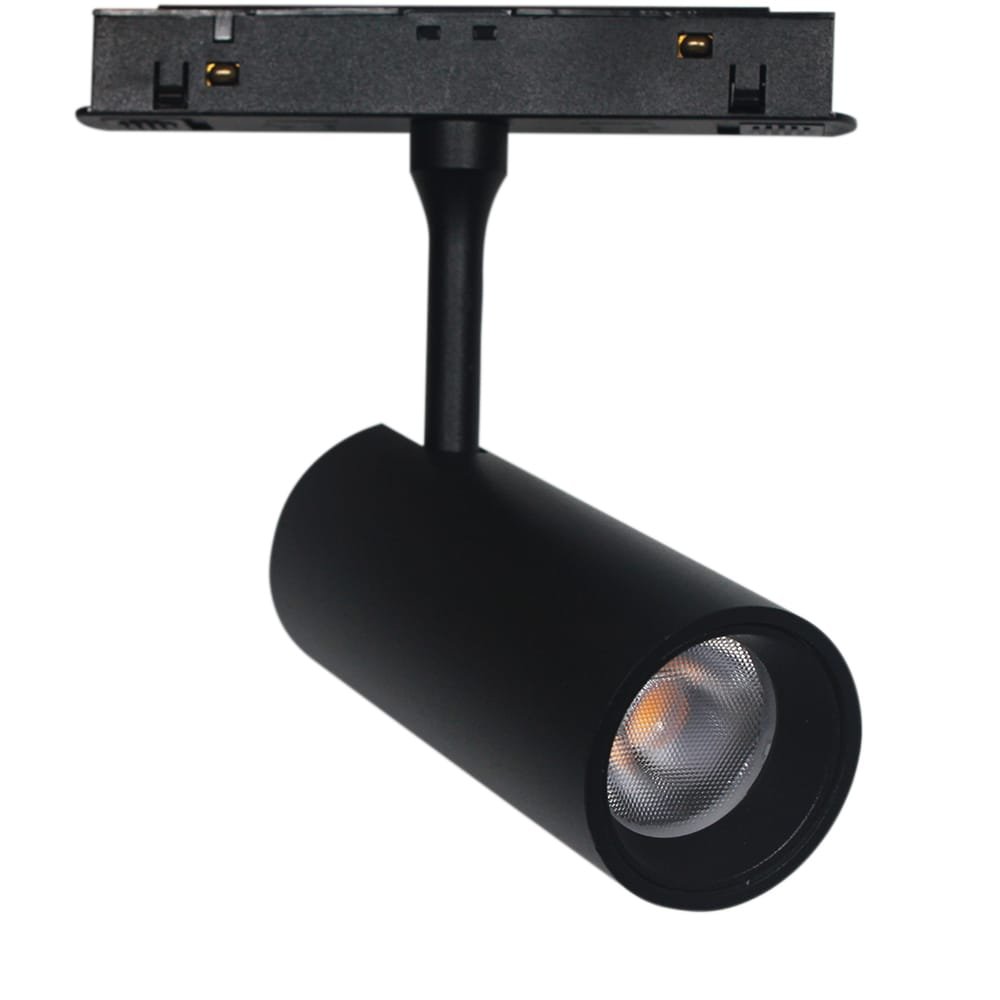
VR133-1 – 48V 6W Magnet Track Spot
Watt 6W | Lumen Value 370 Lm | Constant Voltage 48V |